

Executive Library
E-commerce Outsourcing Services
E-commerce businesses operate at the intersection of customer experience, technology, fulfilment, merchandising, marketing and transaction processing. A store can acquire demand quickly, but growth only becomes sustainable when the operational capacity behind that demand can keep pace.
SGO PeopleHub helps online retailers, direct-to-consumer brands, marketplace sellers, multi-channel merchants and e-commerce service businesses recruit dedicated remote professionals who work as part of their existing organisation. These team members can support customer service, order administration, product listings, marketplace operations, catalogue management, returns, sales administration, data processing and other repeatable functions that keep an online business moving.
The objective is not simply to move tasks to a lower-cost location. It is to build a more deliberate operating structure: local leaders retain control of strategy, brand, commercial decisions and specialist ownership, while trained remote professionals take responsibility for well-defined workflows that can be documented, measured and managed.
Executive Summary
E-commerce can scale faster than the operational teams supporting it. A successful campaign can create thousands of new enquiries, transactions, address changes, order exceptions, refund requests, product questions and support tickets in a short period. New sales channels add complexity. Larger catalogues create more product data. Marketplace expansion introduces additional listing standards, account requirements and administrative work.
When these responsibilities remain concentrated among founders, e-commerce managers or expensive local specialists, growth can start creating its own bottlenecks. Senior employees spend time editing product data, responding to repetitive enquiries, updating orders, checking spreadsheets or coordinating exceptions instead of focusing on acquisition, merchandising, supplier relationships, commercial strategy and conversion performance.
A dedicated e-commerce outsourcing team provides another way to build capacity. Rather than purchasing anonymous task completion from a shared BPO pool, businesses can recruit individuals into clearly defined roles that work exclusively for them. The client sets the processes, systems, KPIs, tone of voice and day-to-day priorities. SGO PeopleHub supports recruitment, employment infrastructure and ongoing workforce support around the team.
The strongest outsourcing models normally begin by identifying repeatable work with clear inputs and outputs. Customer support, order administration, product listing maintenance, returns processing, marketplace administration, product-data management and reporting are common starting points because they can often be documented and measured. More specialised work can then be added as the remote operating model matures.
Outsourcing is not appropriate for every activity. Brand positioning, commercial strategy, pricing authority, supplier negotiations, final financial approvals, sensitive payment access and other high-authority responsibilities may need to remain tightly controlled. The goal is not to offshore everything. It is to separate execution from authority intelligently and place each responsibility with the right level of capability and control.
The case for change
Why E-commerce Businesses Explore Outsourcing
E-commerce growth often increases operational workload before it creates additional management capacity. This makes staffing structure a strategic issue rather than simply an HR issue.
Rapid volume changes
Online demand can be volatile. Promotions, seasonality, product launches and paid-media campaigns can create sudden increases in orders and customer contacts. A business that relies on a small local operations team may struggle to absorb these peaks without slower response times or rushed processing.
Customer expectations
Customers expect fast answers before and after purchase. Product questions, delivery enquiries, return requests and order changes do not disappear because the local team is busy. Dedicated support capacity can help protect the customer experience as transaction volumes increase.
Channel complexity
Selling through a website is only one part of modern e-commerce. Businesses may operate Shopify or WooCommerce alongside Amazon, eBay, Walmart, Etsy or regional marketplaces. Each channel can introduce separate product data, listing rules, messages, orders, promotions and reporting requirements.
Catalogue administration
Large catalogues create continual maintenance. Titles, descriptions, attributes, variants, imagery, categories, tags, pricing data and stock information need to remain accurate across systems. Poor catalogue administration can damage conversion, create customer confusion and increase support volume.
Local hiring pressure
Many e-commerce roles combine administrative accuracy, digital systems capability and customer communication. Recruiting every operational role domestically can become expensive, particularly when senior employees are forced to perform repeatable processing because the support layer is too thin.
Need for operating leverage
Growing revenue without increasing overhead at the same rate is a fundamental e-commerce objective. Outsourcing appropriate workflows can create a more scalable staffing structure while allowing local teams to retain strategic and commercial ownership.
Diagnosis
Where E-commerce Operations Commonly Become Bottlenecked
Operational bottlenecks rarely arrive as one obvious failure. They usually appear as hundreds of small delays: support tickets stay open longer, product information becomes inconsistent, refunds take too long, marketplace listings fall behind, order exceptions are handled reactively and managers spend increasing amounts of time chasing administrative work.
The key executive question is not “what can we send offshore?” It is: which workflows are consuming expensive internal capacity without requiring that level of seniority, authority or physical presence? Once those workflows are identified, they can be documented, assigned and measured.
This distinction matters because effective outsourcing is an operating-model decision. A poorly defined role will remain poorly defined regardless of where the employee is located. Clear ownership, documented procedures, appropriate access and measurable outcomes are the foundations of a successful remote e-commerce team.
Figure 1E-commerce Operating Lifecycle
Stage 01
Acquire- Sales support
- Social commerce and inbox support
Stage 02
Browse- Product listing specialists
- Catalogue and data specialists
Stage 03
Buy- Order management
- Marketplace operations
Stage 04
Fulfil- Inventory and fulfilment coordination
- Order exception handling
Stage 05
Support- Customer support specialists
- Social commerce and inbox support
Stage 06
Return / retain- Returns and refunds support
- Reporting and QA
Capability range
E-commerce Roles and Functions That Can Be Outsourced
A modern e-commerce business contains multiple workflows that can potentially be supported remotely. The right structure depends on channel mix, transaction volume, catalogue complexity, service expectations, systems and the level of expertise required.
Figure 2E-commerce Function Map
Customer Experience
- Customer support specialists
- Social commerce and inbox support
- Sales support
Orders & Returns
- Order management specialists
- Returns, refunds and exchanges support
- Inventory and fulfilment coordination
Catalogue & Marketplace
- Product listing specialists
- Product catalogue and data specialists
- Marketplace operations specialists
- Shopify / WooCommerce administration
- Merchandising support
Operations & Reporting
- Finance administration
- Reporting and data support
Leadership & QA
- Quality assurance and process support
- Team leaders and operations managers
E-commerce Customer Support Specialists
Dedicated customer support professionals can handle inbound email, chat, helpdesk tickets and appropriate phone enquiries. Responsibilities may include product questions, order status, delivery enquiries, returns guidance, account assistance, warranty routing and escalation. The client should define tone of voice, service standards, escalation rules and any circumstances where refunds or financial adjustments require approval.
Order Management Specialists
Order teams can monitor new orders, verify information, update customer details, coordinate address changes, investigate exceptions, liaise with fulfilment partners, track delayed shipments and maintain accurate order records. This role is particularly useful where the business has multiple fulfilment locations or sales channels.
Returns, Refunds and Exchanges Support
Returns can become a significant operational burden as volume grows. Remote staff can manage return requests, issue authorised return instructions, check eligibility against policy, update systems, coordinate exchanges, maintain return records and prepare refund requests for approval where required.

Product Listing Specialists
Listing specialists can create and maintain product pages across e-commerce platforms and marketplaces. Work may include titles, descriptions, specifications, variants, categories, tags, product attributes, image placement, metadata, marketplace templates and catalogue updates. Final claims, regulated statements and pricing authority should remain subject to client controls.
Product Catalogue and Data Specialists
Businesses with large or complex ranges need ongoing product-data discipline. Dedicated catalogue staff can maintain master data, standardise naming conventions, update attributes, clean duplicates, coordinate SKU information, validate product fields and help keep website and marketplace content aligned.
Marketplace Operations Specialists
Marketplace sellers can use dedicated staff to support listing maintenance, account messages, order administration, inventory updates, promotion setup, case administration and routine marketplace operations. The client should retain ownership of platform strategy, commercial decisions and any sensitive account or payment authority.
Shopify / WooCommerce Administration
Platform administrators can support product uploads, collection management, page updates, promotional configuration, basic content changes, order administration, customer records and app-driven workflows within defined permissions. Development, security-sensitive changes and major site architecture should remain with appropriately qualified specialists.

E-commerce Merchandising Support
Merchandising support can include collection curation, product tagging, cross-sell and upsell maintenance, promotional page updates, seasonal catalogue changes, bestseller monitoring and preparation of merchandising reports. Strategic range planning and pricing decisions remain with the commercial team.
Inventory and Fulfilment Coordination
Remote operations staff can monitor stock reports, follow up discrepancies, coordinate with warehouses or 3PL partners, update expected availability, maintain backorder records and escalate fulfilment issues. They support the flow of information; physical warehouse work remains with the fulfilment operation.
E-commerce Sales Support
Sales support professionals can follow up abandoned enquiries, respond to pre-sale questions, qualify higher-value opportunities, assist B2B or wholesale enquiries, prepare standard quotations, maintain CRM records and support account follow-up. Where the business has a more structured outbound function, this can connect naturally with SGO’s Sales Outsourcing Services.
Social Commerce and Inbox Support
Businesses receiving customer enquiries through Instagram, Facebook, TikTok or other channels can allocate remote staff to message triage, standard customer responses, order assistance and escalation. Brand guidelines and response playbooks are critical so communication remains consistent.
E-commerce Finance Administration
Appropriate finance support may include invoice processing, reconciliation preparation, marketplace payout records, refund tracking, payment exception administration, sales reports and transactional bookkeeping support. Approval authority and sensitive banking access should remain appropriately controlled. Businesses building a broader finance function can also explore Accounting & Bookkeeping Outsourcing Services.
Reporting and Data Support
Remote staff can produce recurring operational reports covering orders, support tickets, returns, fulfilment exceptions, marketplace activity, product data or service levels. Their role is to prepare accurate information so managers can make better decisions rather than spend time assembling spreadsheets.
Quality Assurance and Process Support
QA staff can review tickets, order records, listing accuracy and process adherence against defined standards. As teams scale, a dedicated quality function helps identify training needs, recurring errors and process improvements.
Team Leaders and E-commerce Operations Managers
Larger remote teams can include team leaders, supervisors and experienced operations managers. This creates a scalable structure where day-to-day coaching, workflow allocation and quality oversight can happen within the remote operation while the client retains strategic control.
Where authority sits
E-commerce Outsourcing Role Matrix
Table 1E-commerce Outsourcing Role Matrix
| Function | Remote team responsibilities | Client / specialist ownership |
|---|---|---|
| Customer support | Routine enquiries, tickets, order status, returns guidance | Brand standards, escalations, exceptions and approval authority |
| Order management | Order updates, exceptions, coordination, records | Commercial policies, major exceptions and fulfilment strategy |
| Product listings | Uploads, descriptions, attributes, variants, maintenance | Brand claims, pricing and product strategy |
| Marketplace operations | Listings, messages, order admin, routine cases | Marketplace strategy, sensitive account authority and commercial decisions |
| Returns | Eligibility checks, administration, exchanges, records | Refund authority and policy exceptions |
| Inventory coordination | Reports, stock follow-up, discrepancy escalation | Purchasing, warehouse operations and inventory strategy |
| Finance support | Reconciliation prep, payout records, refund tracking | Final approval, banking authority and financial control |
| Reporting / QA | Reports, audits, adherence checks | KPI design, governance and management decisions |
Figure 3Remote Execution and Client Authority
Remote execution
Dedicated Remote Team- Routine enquiries, tickets and order status
- Listing uploads, attributes and catalogue maintenance
- Returns administration and eligibility checks
- Marketplace listings, messages and routine cases
- Reconciliation preparation and payout records
- Recurring reports, audits and adherence checks
Executive Perspective
The goal is not to offshore everything. It is to separate execution from authority intelligently and place each responsibility with the right level of capability and control.
Market
Why the Philippines Can Support E-commerce Operations
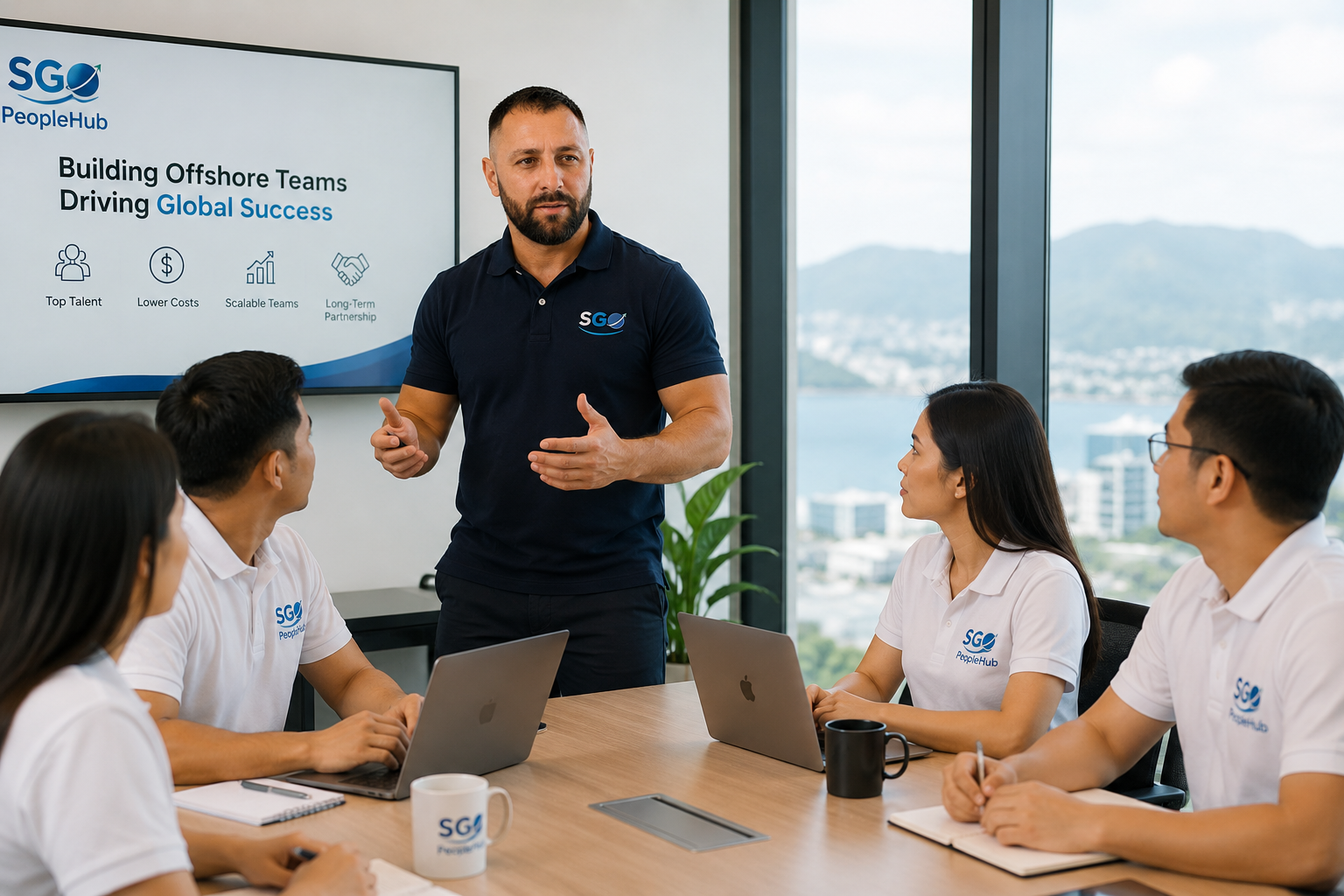
SGO PeopleHub recruits in the Philippines because the country provides a deep talent pool across customer support, administration, finance, digital operations and international business services. For e-commerce organisations, this is particularly relevant because many workflows combine strong written English, process discipline, systems familiarity and customer communication.
Many Filipino professionals have experience working with international customers and overseas businesses, including exposure to helpdesk platforms, CRMs, spreadsheets, e-commerce systems, marketplace tools and remote collaboration. That can make the Philippines a practical location for building dedicated support layers around an online retail operation.
The advantage is not simply labour cost. A strong remote team should be selected for capability, communication, reliability and fit with the client’s operating environment. The client still needs documented processes, effective managers and appropriate technology. SGO’s role is to help recruit and support the people who will operate within that structure.
What changes
Business Benefits of a Dedicated E-commerce Team
Protect customer experience as volume grows
Additional support capacity can help maintain response times and service standards without forcing senior local employees to spend their days clearing routine tickets.
Increase operational capacity
Dedicated staff can take ownership of recurring workflows across orders, listings, marketplaces and returns, allowing the business to absorb more transactions without proportionally increasing local overhead.
Free specialist and management time
E-commerce managers, merchandisers, marketers and founders can concentrate on acquisition, conversion, range strategy, partnerships and growth rather than repetitive processing.
Improve process ownership
A clearly assigned remote specialist can create better accountability than spreading administrative work among multiple busy employees who treat it as secondary to their main role.
Build a more scalable cost base
Remote staffing can allow businesses to add capacity at a different employment-cost base while preserving the option to scale roles and functions as volume increases.
Create clearer specialisation
Separating customer support, order processing, product data and marketplace administration from strategic ownership can produce more focused roles and cleaner operating rhythms.
Commercial view
What Does E-commerce Outsourcing Cost?
There is no single meaningful price for an “e-commerce outsourcing employee.” Cost depends on the role, experience, systems knowledge, communication requirements, working schedule, seniority and scarcity of the required capability. A general order-processing role will have a different profile from a marketplace specialist, experienced team leader or technical e-commerce administrator.
The more useful executive question is whether the role creates sufficient capacity, service improvement or local-time leverage to justify its total employment cost. This should include the value of work transferred away from more expensive employees, not just the difference between two salaries.
SGO PeopleHub therefore begins by defining the actual responsibilities and capability required before treating recruitment as a pricing exercise. The objective is to build the right team, not simply the cheapest one.
Decision framework
Executive Resource: E-commerce Outsourcing Priority Matrix
Executives can assess potential workflows against five criteria. The strongest first-wave outsourcing candidates are usually repetitive, digitally delivered, easy to document, measurable and low in delegated commercial authority.
Figure 4E-commerce Outsourcing Priority Matrix
Volume
Does the activity consume meaningful recurring hours or create backlogs as transactions grow?
Repeatability
Does the work follow a reasonably consistent process with identifiable inputs and outputs?
Trainability
Can procedures, examples and escalation rules be documented for another employee?
Measurability
Can quality, turnaround time, volume or service level be monitored?
Authority
Can execution be separated from pricing, financial approval, strategic or security-sensitive authority?
Governance
Risks of E-commerce Outsourcing and How to Manage Them
Customer experience inconsistency
Remote employees represent the brand. Businesses should provide tone-of-voice guidance, response templates, escalation rules, product knowledge and ongoing QA rather than assuming a new hire will understand the brand automatically.
Sensitive data and system access
E-commerce employees may work with customer records, addresses, order details and operational systems. Access should follow least-privilege principles, with role-based permissions, secure authentication, device controls and clear rules around payment information.
Refund and financial authority
Refunds, credits and payment changes can create financial exposure. Approval thresholds should be explicit so employees know what they can process, what requires management approval and what should never be handled through unsecured channels.
Marketplace account risk
Marketplaces can impose strict performance and policy requirements. Clients should retain appropriate ownership of account strategy, policy interpretation and sensitive permissions while remote staff handle clearly defined operational tasks.
Poor process documentation
If the current operating process exists only in one manager’s head, moving it to a remote team will expose the weakness quickly. Documenting the workflow is not bureaucracy; it is part of building a scalable operation.
Weak management rhythm
Remote teams need clear ownership, regular communication and measurable priorities. They should not be treated as an external black box. The strongest teams are integrated into the client’s meetings, systems and management cadence.
Overdependence on individuals
Critical knowledge should not sit with one person indefinitely. Documentation, shared procedures, cross-training and sensible team structures reduce key-person risk as the operation grows.
Suitability
Is E-commerce Outsourcing Right for Your Business?
E-commerce outsourcing is particularly suitable for businesses with repeatable digital workflows, growing transaction volumes, structured platforms and managers who can define responsibilities clearly. It is often valuable when senior local staff are spending too much time on routine operations or when the business needs more capacity without building every support role in the same domestic labour market.
When it may be less suitable
It may be less suitable where the work is highly undefined, requires physical presence, depends on unrestricted payment authority or is so strategically sensitive that it cannot be separated from senior decision-making. Businesses expecting remote employees to “figure everything out” without onboarding, documentation or management are also unlikely to get the best results.
A strong starting point is usually one or two workflows that are already measurable and create visible friction. Once the team is performing consistently, additional responsibilities or specialist roles can be added.
The SGO operating model
Why SGO PeopleHub?
There are different outsourcing models. Some providers sell completed processes through large shared service teams. Others provide task-based virtual assistance. SGO PeopleHub focuses on helping businesses build dedicated remote teams.
The professionals recruited for your organisation work exclusively for your business. You retain control over their daily priorities, systems, workflows, training and performance expectations. SGO supports the recruitment and employment infrastructure around the team, including ongoing workforce support and the ability to recruit additional people as the operation expands.
For e-commerce companies, that means a customer support specialist, order administrator, product listing professional or marketplace operator can become an integrated member of the business rather than an anonymous resource switching between unrelated clients.

Recruitment process
How SGO PeopleHub Builds Your E-commerce Team
Understand the operating requirement
Identify the workflows, bottlenecks, transaction volumes, systems and outcomes that the role needs to support.
Define the role
Translate the work into responsibilities, required experience, schedule, KPIs and reporting relationships.
Recruit suitable professionals
Source candidates whose capability matches the actual role rather than allocating generic available staff.
Screen and shortlist
Assess relevant experience, communication, technical exposure and overall role fit.
Client interviews and selection
The client interviews suitable candidates and makes the final hiring decision.
Employment and onboarding support
SGO supports the employment infrastructure while the client provides systems access, product knowledge and process training.
Day-to-day client management
The team works within the client’s priorities, systems and management rhythm.
Ongoing support and scaling
SGO provides ongoing workforce support and can recruit additional roles as the team grows.
Team design
Example E-commerce Team Structures
Figure 5E-commerce Team Scaling Model
Stage 1One specialist
A single clearly defined role such as customer support, order management or product listings.
Stage 2Three to five person team
Recurring workflows owned across support, orders and catalogue.
Stage 3Team leader and specialists
A supervisory layer for coaching, workload allocation and quality oversight.
Stage 4Multi-function e-commerce operations team
Support, orders, returns, marketplaces, catalogue, reporting and leadership together.
Growing DTC Brand
- 1 E-commerce Customer Support Specialist
- 1 Order & Returns Administrator
- 1 Product Listing / Catalogue Specialist
A practical structure for a brand that has outgrown founder-led support and needs consistent ownership of customer and catalogue operations.
Multi-channel Marketplace Operation
- 1 E-commerce Team Leader
- 2 Marketplace Operations Specialists
- 1 Product Data Specialist
- 2 Customer Support / Order Specialists
Suitable for a seller managing multiple marketplaces, larger order volumes and continual listing maintenance.
Scaled E-commerce Operations Team
- 1 E-commerce Operations Manager
- 2 Team Leaders
- 4 Customer Support Specialists
- 3 Order / Returns Specialists
- 2 Marketplace Specialists
- 2 Product Catalogue Specialists
- 1 QA / Reporting Specialist
Demonstrates how a business can progress from individual hires to a structured remote operations function with specialist ownership and an internal management layer.

How it works
Implementation Timeline
Exact recruitment timing depends on role complexity and candidate availability, but the implementation journey should follow a controlled sequence rather than rushing a hire into an undefined position.
Figure 6SGO Implementation Timeline
Discovery and workflow mapping
Role definition and KPI design
Candidate sourcing and screening
Client interviews and selection
Employment setup and access planning
Operational onboarding and training
Go live with controlled responsibility transfer
Performance review, optimisation and team expansion
FAQs
E-commerce Outsourcing Frequently Asked Questions
What is e-commerce outsourcing?
E-commerce outsourcing involves assigning appropriate online retail and operational responsibilities to an external or remote workforce. This can include customer support, order administration, product listings, marketplace operations, returns, catalogue management, reporting and other back-office functions.
What e-commerce roles can be outsourced?
Common roles include customer support specialists, order administrators, returns specialists, product listing professionals, catalogue/data specialists, marketplace operators, Shopify or WooCommerce administrators, inventory coordinators, sales support staff, finance administrators, QA specialists and team leaders.
Can customer support be outsourced for an online store?
Yes. Dedicated support staff can handle email, live chat, helpdesk tickets and appropriate phone enquiries, provided they receive strong product training, tone-of-voice guidance and clear escalation rules.
Can order management be outsourced?
Yes. Order administration is often a strong outsourcing candidate because it is digital, repetitive and measurable. Remote staff can monitor orders, update records, coordinate changes and investigate exceptions within defined processes.
Can product listings be outsourced?
Yes. Product listing professionals can create and maintain product pages, titles, descriptions, attributes, variants, categories, tags and other catalogue data. Final pricing and product claims should remain appropriately controlled.
Can marketplace operations be outsourced?
Many routine marketplace functions can be supported remotely, including listing maintenance, messages, order administration and operational case management. Sensitive account permissions and strategic decisions should remain with authorised personnel.
Can Shopify administration be outsourced?
Yes. Suitable professionals can support product uploads, collection management, content updates, order administration and routine platform tasks within controlled permissions.
Can returns and refunds be outsourced?
Returns administration can be outsourced effectively. Refund authority should be defined through explicit thresholds and approval rules so the business retains appropriate financial control.
Can inventory management be outsourced?
Remote staff can support inventory reporting, stock reconciliation follow-up, backorder records and coordination with warehouses or 3PLs. Physical inventory handling remains with the fulfilment operation.
Is e-commerce outsourcing secure?
It can be operated securely when businesses implement role-based access, secure authentication, device policies, appropriate permissions and clear handling rules for customer and payment information.
Will dedicated staff work only for our business?
Under the SGO PeopleHub dedicated staffing model, the professionals recruited for a client work exclusively for that client rather than rotating between unrelated businesses.
Who manages the remote employee day to day?
The client directs day-to-day work, priorities, systems and performance expectations. SGO provides the employment and ongoing workforce support infrastructure around the employee.
Can we interview candidates before hiring?
Yes. Client interviews and selection are central to the model because the objective is to recruit people who fit the role, business and operating environment.
Can we start with one e-commerce employee?
Yes. Many businesses begin with one clearly defined role such as customer support, order management or product listings, then expand after the operating model is proven.
Can we build a full e-commerce operations team?
Yes. Teams can scale across customer support, orders, returns, marketplaces, catalogue management, reporting and leadership, depending on business volume and complexity.
What should we outsource first?
Start with a high-volume, repeatable and measurable workflow that consumes significant internal time but does not require constant senior authority. Customer support, order administration and product-data maintenance are common examples.
How do we onboard remote e-commerce staff?
Provide systems access, product training, process documentation, examples, escalation rules, communication routines, service standards and measurable expectations. Strong onboarding is one of the most important predictors of early performance.
How should remote e-commerce teams be managed?
Manage them as integrated employees: clear ownership, regular communication, appropriate feedback, performance metrics and access to the information needed to perform their role effectively.
How much can e-commerce outsourcing save?
There is no responsible universal saving percentage. Economics depend on role, seniority, domestic comparison costs, productivity, management overhead and the value of capacity created. The business case should be evaluated role by role.
How do we know if a workflow is suitable for outsourcing?
Assess whether it is high-volume, repeatable, trainable and measurable, and whether execution can be separated from sensitive authority. The E-commerce Outsourcing Priority Matrix on this page provides a practical starting point.
Build More Capacity Into Your E-commerce Operation
E-commerce businesses do not become operationally simpler as they grow. More customers, channels, products and transactions create more work behind the scenes. The question is whether that work continues accumulating around expensive local specialists or is deliberately assigned to a scalable support structure.
SGO PeopleHub can help you recruit dedicated remote professionals who become part of your organisation and take ownership of clearly defined e-commerce workflows. Whether you are building your first support role or a larger multi-function team, the starting point is understanding where additional capacity will create the greatest operational value.
Explore More Executive Guides
Last reviewed: August 2026. SGO Executive Library, E-commerce Outsourcing Services, Component Library v5.15.