OFFSHORE MARKETING & TECH TEAMS
Build remote marketing and tech teams with experienced Filipino professionals supporting growth, operations, development and digital execution.
Marketing & Tech
We help businesses build scalable remote marketing and tech departments with experienced Filipino professionals aligned to internal workflows, communication systems and operational goals.
From sourcing and hiring to HR, payroll, compliance and ongoing support, every part of managing your remote team is handled behind the scenes so your business can stay focused on growth, delivery and performance.
We provide fully managed offshore staffing solutions from the Philippines designed to help businesses build reliable marketing and tech teams without the operational pressure of traditional hiring. Our approach is built around long-term scalability, workflow alignment and day-to-day operational support.
From recruitment and onboarding to HR, payroll, compliance and retention, we manage the infrastructure behind your remote team so your business can stay focused on execution, growth and performance.
Whether you are expanding your marketing department, improving technical capacity or building a more scalable support structure, our teams integrate directly into your business and operate within your existing systems, communication channels and processes.
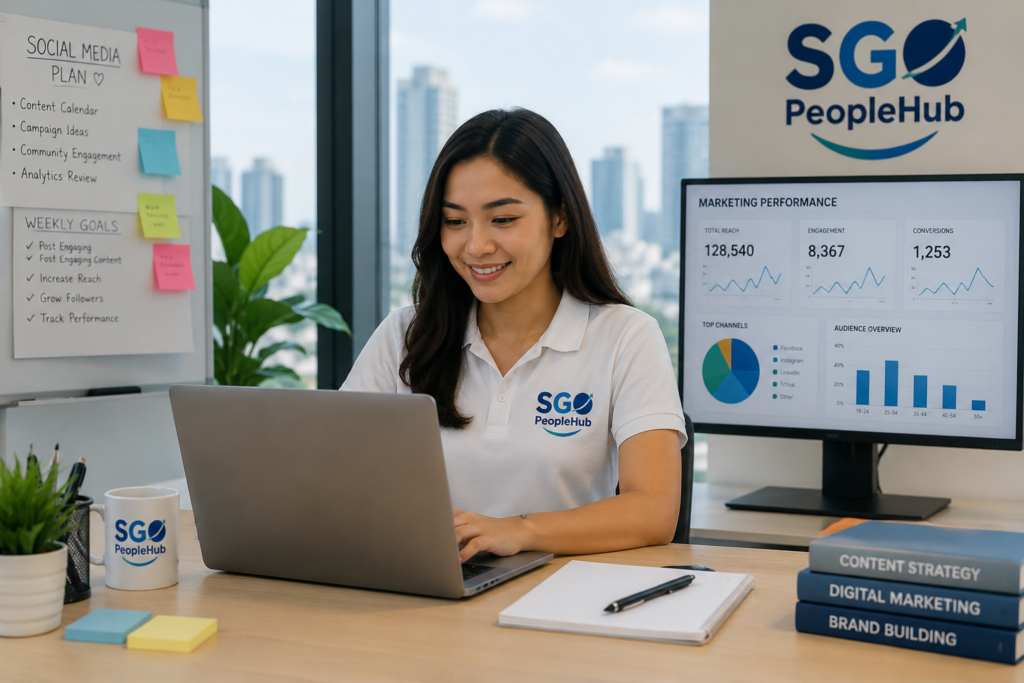
Reduce operational pressure while building reliable remote support teams aligned to your workflows, communication systems and business goals.
We help businesses scale with experienced offshore marketing professionals and technical support staff from the Philippines – without the overhead and delays of traditional hiring.
Every team member is employed, managed and supported through a structured offshore staffing model designed for long-term consistency, retention and performance.
From onboarding and HR management to payroll, compliance and operational support, we handle the infrastructure behind your remote team so your business can stay focused on growth.
Whether you are scaling marketing execution, improving customer support coverage or building operational capacity, your remote staff integrate directly into your existing systems and processes.
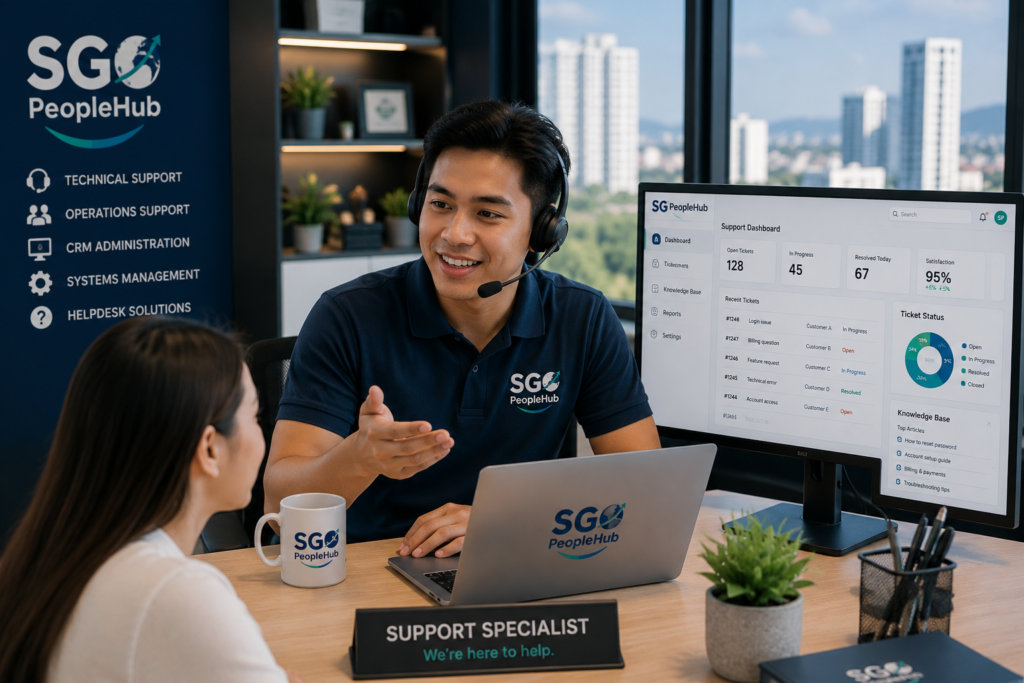
Businesses today require more than a single support role. As companies grow, they need specialised remote staff across marketing, technical support, operations and customer engagement to maintain consistency and scale efficiently.
Remote staffing from the Philippines allows businesses to build structured support teams without the overhead of traditional local hiring. From marketing execution and content coordination to CRM management and operational support, offshore teams help businesses improve output while maintaining flexibility.Many businesses use remote marketing and tech staff to support areas such as:
Structured offshore staffing helps businesses build reliable operational support across marketing, customer engagement and technical workflows. With dedicated remote teams aligned to internal systems and communication processes, businesses can improve consistency, reduce operational bottlenecks and scale more efficiently over time.
Many businesses are not struggling because of demand, they are struggling because internal workflows become inconsistent as operations grow. Without proper support systems, marketing execution, customer communication and technical workflows often become fragmented and inefficient.
As businesses grow, operational pressure often increases across marketing, customer support and internal systems. Building structured remote support teams helps improve workflow consistency, response times, operational efficiency and long-term scalability without adding unnecessary hiring complexity.
Why SGO PeopleHub
SGO PeopleHub helps businesses build reliable remote marketing, support and operational teams designed for long-term consistency, workflow alignment and scalable business growth - not just short-term staffing support.
We have worked across different industries, operational environments and business support functions where workflows became inconsistent, internal teams became overloaded and day-to-day execution suffered due to lack of structure, process alignment and scalable support systems.
This experience has helped us understand how to:
Some businesses simply need reliable remote marketing or support staff. Others require deeper operational support to improve workflows, communication systems and day-to-day execution. SGO PeopleHub is structured to support both.
Not every business requires the same operational support structure. Some companies simply need one experienced remote marketing or support professional, while others require more scalable offshore teams supporting customer communication, CRM management, workflow administration, reporting and day-to-day operational tasks.
SGO PeopleHub is built to support both straight forward staffing needs and more structured long-term operational support models designed around your internal systems and business goals.
We help businesses scale with experienced remote marketing, customer support, CRM and operational support professionals aligned to internal workflows, communication systems and day-to-day business operations.
Support content scheduling, audience engagement and day-to-day social media management across multiple platforms.
Manage inbound customer enquiries, support tickets, live chat and ongoing client communication workflows.
Maintain CRM organisation, reporting accuracy, workflow updates and operational administration support.
Assist with content publishing, SEO coordination, website updates and ongoing marketing execution.
Support internal processes, workflow management, reporting systems and operational task coordination.
Handle lead tracking, CRM updates, prospect organisation and inbound enquiry coordination.
Provide technical assistance, helpdesk support and troubleshooting across customer and internal systems.
Assist with campaign coordination, reporting, workflow execution and ongoing marketing support tasks.
Support customer retention, engagement and long-term client relationship management processes.
Reliable business operations are built through consistent systems, communication and workflow management. As businesses grow, remote support teams help maintain operational efficiency across marketing execution, customer support, CRM administration and day-to-day business processes.
The goal is not simply to add remote staff, but to create more structured, scalable and efficient operational support systems that improve long-term business performance.
Our remote marketing and operational support staff are experienced working inside modern CRM systems, project management tools, communication platforms and workflow software. This allows businesses to integrate offshore support teams into existing operations quickly while maintaining consistency, reporting visibility and operational continuity.
SCALABLE SUPPORT STRUCTURES
Designed for businesses needing ongoing support with content coordination, campaign execution and day-to-day marketing workflows.
Supports inbound customer communication, ticket management, live chat support and customer service consistency.
Built for businesses needing structured support across CRM management, reporting, operational workflows and internal administration.
Focused on supporting scalable business growth through improved communication, operational structure and workflow consistency.
These examples are designed to show how remote marketing and operational support teams can be structured around different business goals, workflow requirements and growth stages.
BUILD YOUR OFFSHORE TEAM
Pre-vetted talent. Fully managed. Ready to perform from day one.
No complicated setup. No hidden costs. Just a better way to scale your team.
FAQ
Everything you need to understand about pricing, staffing, onboarding, management, compliance and long-term operational support with SGO PeopleHub.
You are not just paying for a person to fill a role. You are investing in a fully structured, supported and performance-driven extension of your business.
Your monthly investment includes:
– Recruitment and precise candidate sourcing aligned to your role and business needs
– Structured onboarding and full integration into your systems, workflows and processes
– Ongoing HR management, support and employment stability
– Payroll handling, local compliance and administrative management
– Performance monitoring, accountability and structured oversight
– Time tracking with clear visibility across output and activity
– Staff benefits and retention support to maintain long-term consistency
Beyond the fundamentals, this model is designed to deliver ongoing value – not just initial placement. This also includes continuous performance support, ongoing development, alignment with your evolving business needs, and access to experience across multiple roles, industries and systems.
Many businesses also experience 10-20+ hours per week freed up internally, faster turnaround times, improved consistency, better organisation, and increased output without increasing local headcount.
Our pricing is designed to be clear, structured and predictable from the beginning, without hidden fees or unexpected operational costs appearing later on.
At the start, there is an initial upfront payment which includes:
This allows us to properly secure, onboard and prepare your team member while investing the time and operational resources required to build a stable long-term workforce structure from day one.
After the initial setup phase, everything moves into a straightforward monthly pricing model designed for long-term scalability and operational simplicity.
The monthly structure already incorporates many of the employment-related costs and operational overheads that businesses would normally need to manage separately, including:
This creates a far more transparent and manageable cost structure compared to traditional hiring, where businesses often face additional expenses tied to taxes, pensions, insurance, recruitment fees, HR administration, office overhead and workforce management.
Our objective is to create a model where businesses can scale with confidence, maintain predictable operational costs and focus on performance, output and growth rather than constantly managing employment complexity and unexpected overhead.
No. Our model is designed to be transparent, predictable and operationally structured from the beginning.
We do not believe in fragmented pricing, hidden operational layers or unexpected charges appearing later in the process. One of the biggest reasons businesses move toward structured remote workforce models is to gain greater financial clarity and reduce the unpredictability that often comes with traditional hiring and outsourcing structures.
Our pricing is built to consolidate many of the employment-related costs and operational overheads that businesses would normally manage separately, including:
This creates a far more predictable and manageable operational model compared to traditional hiring where businesses may later encounter additional costs tied to:
We believe businesses scale more effectively when pricing is simple, transparent and aligned with long-term operational planning rather than layered with hidden variables and unexpected add-ons.
If there are ever additional operational requirements outside the agreed structure, these are discussed clearly and transparently in advance so businesses maintain full visibility and control over costs at all times.
Yes – in most cases, significantly.
For businesses in countries such as the USA, UK, Australia, Canada and New Zealand, the true cost of hiring locally is often far higher than the base salary alone. Once additional employment overheads are included, the operational cost difference can become substantial.
Traditional local hiring commonly includes expenses such as:
Many businesses initially calculate only salary when comparing hiring costs, but the real long-term employment cost is usually much higher once all operational and employment obligations are factored in.
Our structure is designed to simplify and consolidate these areas into one predictable workforce model with significantly lower operational overhead while still maintaining structured employment, support and long-term workforce stability.
However, the advantage is not only cost reduction.
Businesses also benefit from:
This means businesses are often not simply reducing cost – they are improving how the business operates overall while building a more scalable and efficient workforce structure.
For many companies, the result is the ability to grow faster, increase operational capacity and maintain stronger long-term profitability without carrying the same level of overhead typically associated with traditional local hiring models.
No. We handle the employment structure, HR administration, payroll processing and local compliance responsibilities so your business does not need to manage the complexity of overseas employment internally.
This includes:
Managing remote staff independently in another country can become operationally complex very quickly, especially when dealing with local regulations, employment obligations, workforce management and administrative processes. Our structure is designed to remove that burden and create a far more streamlined and secure operational model.
Your business remains focused on:
Meanwhile, we manage the employment and operational support infrastructure behind the scenes to help maintain compliance, workforce stability and long-term operational consistency.
This creates a significantly more structured, scalable and lower-risk approach to building remote teams while allowing businesses to focus on growth, execution and performance rather than employment administration.
We build our model around long-term workforce stability, structured employment and operational consistency – not short-term placements or temporary freelance arrangements.
Every team member operates within a structured support environment designed to improve retention, accountability and long-term performance. This includes:
Because team members are positioned within a stable and professionally managed environment, businesses typically experience significantly stronger long-term consistency compared to traditional outsourcing or freelance models.
We also focus heavily on operational alignment from the beginning. Team members are integrated into your systems, communication structure and workflows early so they become a genuine extension of your business rather than isolated external support.
As the relationship develops, many businesses find that their remote staff become deeply embedded within day-to-day operations, often remaining with the company long-term and growing into increasingly valuable operational roles over time.
The result is usually:
Our objective is not simply to place staff – it is to help businesses build dependable, scalable and long-term remote workforce structures that continue performing consistently over time.
The upfront commitment allows us to properly build, structure and support your remote workforce from the very beginning rather than treating the process like short-term recruitment or temporary outsourcing.
Before a team member even starts, significant work happens behind the scenes, including:
This structure is designed to create stability, accountability and stronger long-term results for both the business and the employee.
Unlike traditional freelance or temporary staffing models, our approach focuses on building properly integrated remote team members who operate as a real extension of your business. The upfront commitment helps ensure operational seriousness, workforce consistency and long-term alignment from both sides.
It also allows us to confidently invest resources into sourcing high-quality professionals, onboarding them correctly and providing the ongoing support structure required to maintain performance, retention and scalability over time.
For most businesses, this results in:
The goal is not simply filling a role quickly — it is building a structured and dependable remote workforce foundation designed for long-term operational success.
If a selected team member is not the right fit during the early stages, we support a structured review and replacement process designed to protect long-term operational success for both the business and the employee.
Our goal is not simply to place someone quickly – it is to help you build a stable, reliable and properly aligned long-term team structure.
During the onboarding and probation period, we work closely with both parties to monitor:
If concerns arise early, we encourage structured communication first so expectations, workflows or support systems can be adjusted where appropriate. In many cases, proper guidance and alignment resolve initial issues quickly as the team member becomes more integrated into the business.
However, if the fit genuinely is not right, we can support a replacement process within the agreed onboarding and probation structure to help maintain operational continuity and minimise disruption.
Because we operate through TalentHub and maintain access to a growing pool of pre-screened professionals, businesses are not locked into starting the recruitment process from zero again if changes are required.
The objective is to create a workforce structure that remains stable, scalable and properly aligned with your business long-term – not simply fill a position temporarily.
Every team member enters a structured onboarding and 6-month probation and alignment period designed to ensure strong integration, communication, consistency and long-term operational performance within your business.
From the beginning, team members are integrated directly into your systems, workflows and operational structure so they can contribute productively as quickly as possible while still receiving ongoing guidance, support and performance alignment during the early stages.
The probation and alignment period allows both the business and the employee to:
Throughout this period, we continue providing structured HR support, operational guidance and workforce oversight behind the scenes while your business maintains control over day-to-day management, priorities and performance direction.
The structure is designed to protect both parties while creating a more stable and dependable long-term workforce environment rather than a short-term or transactional staffing arrangement.
Our goal is not simply successful onboarding – it is building a properly aligned, scalable and high-performing remote team structure capable of supporting your business long-term.
We follow a structured recruitment and screening process designed to identify professionals who are not only technically capable, but also reliable, communicative and operationally aligned with long-term remote work environments.
Before any candidate reaches your business, they typically move through multiple stages of assessment which may include:
Our TalentHub system gives us access to a growing pool of pre-screened professionals across multiple industries, allowing us to move faster while still maintaining quality and structure throughout the hiring process.
We focus heavily on qualities that directly impact long-term remote workforce success, including:
Only candidates who meet our internal standards are shortlisted and presented to the client for final review and interview consideration.
We also understand that every business operates differently. That is why recruitment is not handled through a one-size-fits-all approach. We work closely with clients to understand:
This allows us to identify candidates who are not only qualified on paper, but genuinely aligned with the structure, pace and operational needs of the business.
Our objective is not simply fast recruitment – it is building stable, scalable and high-performing long-term workforce structures that integrate properly into your business from the beginning.
Before any candidate is introduced to your business, we carry out a structured recruitment and evaluation process designed to save you time and improve candidate quality from the beginning.
This typically includes:
Once candidates are shortlisted, we arrange interviews directly with your business so you can:
The process is intentionally flexible depending on how involved you want to be.
Some businesses prefer to:
Others prefer a more streamlined approach where we:
In some cases, clients may even choose to skip interviews entirely for lower-risk operational roles and proceed based on our internal recommendation and screening process.
Our objective is to reduce the operational burden of hiring while still ensuring businesses maintain full visibility, control and confidence throughout the selection process.
Team members submit leave requests through our structured time tracking and calendar management system after first coordinating approval with their designated internal manager or team leader within your business.
This helps maintain clear communication, operational continuity and proper internal oversight while ensuring scheduling decisions remain aligned with your business priorities and workflow requirements.
Your management team maintains full visibility and control over:
The system is designed to give businesses a structured and transparent way to manage remote workforce operations while maintaining flexibility and clear accountability across the team.
Public holidays, leave requests and scheduling structures can also be aligned around your operational requirements depending on the role, workload and business setup.
Alongside the tracking systems themselves, we also provide operational guidance and support based on extensive experience managing remote workforce structures. This helps businesses implement stronger scheduling, communication and accountability processes as their teams grow over time.
The objective is not simply tracking attendance – it is creating a stable, transparent and professionally managed operational structure that supports long-term consistency, performance and workforce reliability.
es. Your remote team operates directly within your business systems, workflows and management structure, giving you full visibility and operational control across daily output, communication and performance.
Most businesses manage day-to-day direction internally through their own:
This allows your remote staff to function as a genuine extension of your existing business operations rather than as disconnected outsourced support.
You maintain visibility over:
Alongside this, we support the broader workforce structure behind the scenes through:
We can also provide guidance on how to structure management, reporting and workflow systems based on extensive experience building and scaling remote teams across multiple industries.
The objective is to give businesses the flexibility and control of an internal team while removing much of the employment complexity, operational overhead and workforce management burden traditionally associated with scaling staff.
Your team operates directly within your systems, workflows and operational processes, allowing you to monitor output, communication, task completion and overall performance through the same tools your business already uses internally.
Because the team becomes integrated into your day-to-day operations, most businesses naturally measure performance through:
For businesses wanting additional oversight, we can also support:
Your internal managers and team leaders remain fully in control of day-to-day direction, priorities and performance expectations, while we support the broader operational structure behind the scenes through workforce systems, HR support and operational guidance.
We also help businesses implement stronger remote management structures based on extensive experience scaling offshore teams, including guidance around:
The objective is not simply monitoring activity — it is building a transparent, accountable and high-performing operational structure where your business maintains full visibility and control while benefiting from structured remote workforce support.
Clear communication structure is one of the biggest drivers of remote team performance. Each staff member operates within your business systems, workflows and management structure while remaining fully supported by SGO.
For most businesses, we recommend that day-to-day management remains internal. Your business already understands its priorities, workflows, customers and operational expectations better than anyone else. This creates faster decision-making, stronger accountability and better long-term integration.
Typically, communication flows through your designated manager or team leader who:
SGO supports the structure behind the scenes through:
As your team scales, there are multiple ways the structure can evolve. Many clients eventually identify strong long-term team members and promote them into leadership or supervisory roles internally. We can also assist with sourcing or providing dedicated team leaders where operationally required.
Our leadership team has extensive experience building and scaling remote teams across multiple industries, and we are happy to guide clients on:
The goal is not simply outsourcing tasks – it is building a structured, scalable and fully integrated remote operation that performs consistently as your business grows.
We handle the employment, HR, onboarding, compliance and operational support behind the scenes so your business can stay focused on performance, growth and day-to-day execution.
This includes:
Your business maintains control over the work, priorities, systems and performance direction, while we manage the operational structure that keeps the workforce stable, compliant and performing consistently.
We work closely with both the client and the employee throughout the entire relationship to maintain accountability, retention, consistency and long-term operational success. This is not simply recruitment — it is an ongoing managed workforce structure designed to support scalability, performance and business continuity over time.
One of the biggest advantages of our structure is that businesses are not left carrying the full operational and financial burden during maternity, paternity or extended statutory leave periods – which is often the case with many traditional outsourcing providers.
With many providers, clients can sometimes be required to:
In some cases, businesses may effectively be paying for an unavailable staff member without receiving active operational support or continuity coverage.
Our structure is designed very differently.
Where extended statutory leave such as maternity leave occurs, we operate under a continuity-focused workforce model designed to help maintain operational stability and minimise disruption to your business.
This means:
This creates a significantly more stable and business-friendly approach compared to models where the client absorbs both the employment cost and operational disruption simultaneously.
Your business maintains:
At the same time, employees remain protected through a properly managed and legally compliant employment structure.
We believe long-term workforce partnerships should be built around fairness, continuity and operational support for both parties – not simply transferring workforce risk onto the client when situations arise.
For many businesses already working with traditional outsourcing providers, this level of continuity planning, operational protection and structured support is one of the biggest differences in how secure and scalable the relationship feels long-term.
All standard employment-related benefits and statutory obligations are already built into the monthly structure, so there are no surprise add-ons, hidden employment costs or unexpected liabilities later on.
This includes items such as:
In traditional hiring structures, many businesses only calculate base salary initially and later discover additional employment costs tied to benefits, administration, compliance, retention, leave, insurance and workforce management. Our structure is designed to remove that uncertainty by incorporating these obligations into one clear and predictable monthly model from the beginning.
This allows businesses to budget more accurately, scale more confidently and avoid the operational complexity that often comes with managing overseas employment independently.
We handle the local employment structure, administration and compliance behind the scenes while your business stays focused on performance, workflow and growth. The result is a more stable, transparent and operationally efficient workforce model with far fewer hidden variables over time.
Most businesses begin receiving candidate options within approximately 3–7 business days depending on the role, experience level and hiring requirements. In some cases, especially for common operational or support positions, the process can move significantly faster and candidate introductions may begin within as little as 48 hours.
A major advantage of our structure is TalentHub – our internal recruitment and workforce sourcing system built specifically for scalable remote staffing. TalentHub gives us access to a growing pool of pre-screened professionals across multiple industries, allowing businesses to move significantly faster than traditional hiring processes.
This means many candidates are already:
The timeline usually depends on:
Our process is designed to move efficiently while still maintaining quality, structure and long-term fit. We focus not only on skills and experience, but also communication ability, reliability, professionalism and operational alignment.
Once candidates are approved, onboarding and integration can begin immediately. Team members are introduced into your systems, workflows and communication structure quickly so businesses can begin seeing operational support and productivity improvements without long hiring delays.
Because we already understand the structure of remote workforce operations, most clients find the process significantly faster, more organised and far less operationally demanding than traditional recruitment and hiring methods.
Yes. One of the biggest advantages of a structured remote workforce is the ability to scale in a controlled, predictable and operationally efficient way as your business grows.
Some businesses begin with just one or two remote team members to support specific operational tasks, while others build larger structured teams immediately depending on their size, systems and growth objectives. In some cases, businesses scale directly into large multi-role operations with dozens or even hundreds of remote staff integrated across different departments.
Because the structure, systems and support processes are already in place, scaling becomes significantly easier compared to traditional hiring methods.
As your business evolves, you can:
Through our TalentHub recruitment system, we maintain access to a growing pool of pre-screened remote professionals across multiple industries, allowing businesses to scale faster without restarting the hiring process from scratch each time.
We also help businesses structure scaling correctly by providing guidance on:
The goal is not simply adding more people — it is building a stable, scalable and well-supported operational structure that continues performing consistently as the business grows.
Once you are ready to move forward, the process is straightforward and fully guided from start to finish.
You can begin by requesting a quote or booking a consultation so we can better understand:
From there, our team guides you through each stage of the process, including:
Depending on the role and requirements, candidate options can often begin arriving within a matter of days, with onboarding able to start shortly after approval.
Some businesses start with a single remote team member, while others scale into larger operational teams immediately. The structure is designed to remain flexible, scalable and aligned with your business growth over time.
Our goal is to make the transition into remote workforce operations simple, structured and operationally effective while giving your business long-term support, visibility and scalability from day one.